
When I was growing up, we used to spend our holidays in the same place. And I always rejoiced at encountering familiar sights on our holiday year after year. To be fair, at that age it usually meant getting cotton candy from the same stand every year.
It turns out it’s not much different as an adult, although my interests have shifted from sweet treats to plant treats.
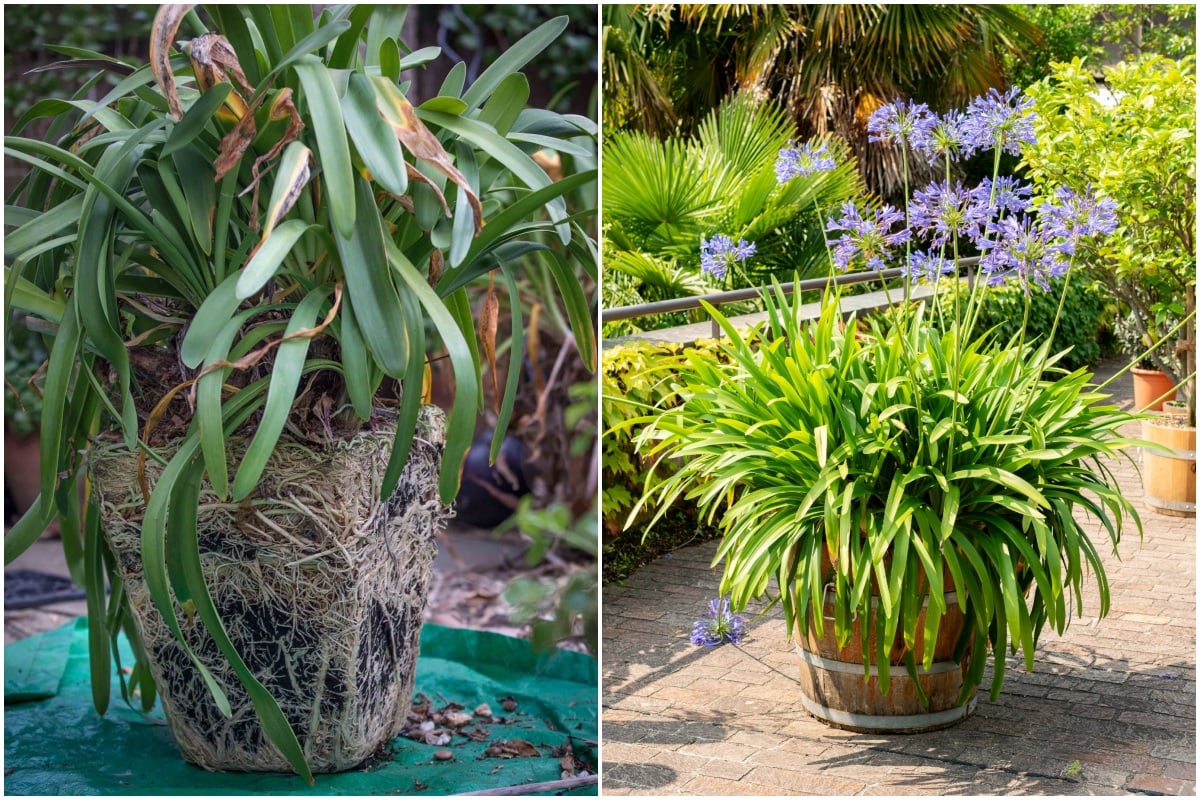
The white agapanthus strewn along the boardwalk in one of my favorite seaside towns was there to greet me this year just as it was last year. And it will hopefully be there on our next visit. But this year, it served as a reminder that my own (blue) agapanthus has not been blooming.
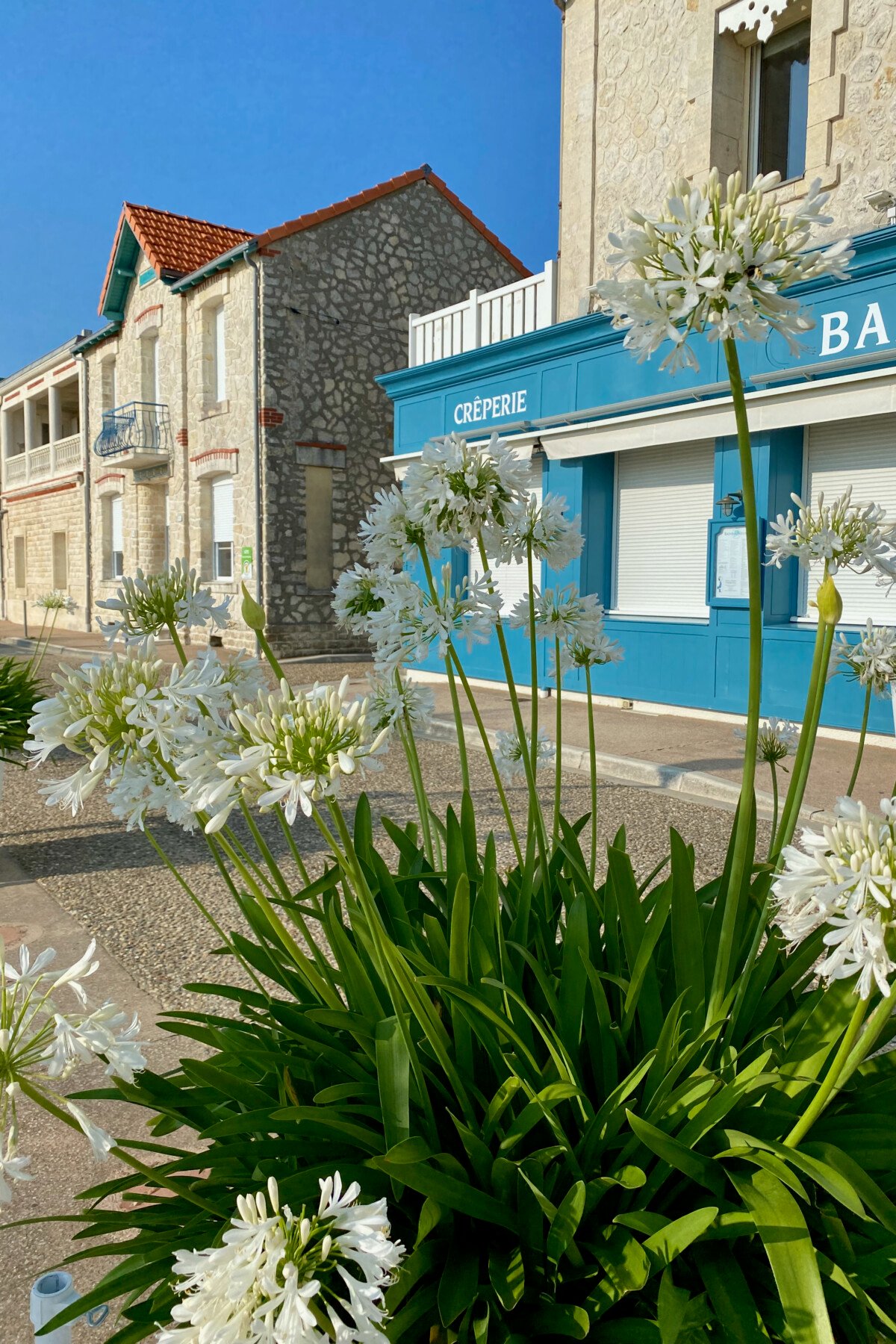
A couple of years ago, inspired by the scenery in this beachside town, I decided to bring some agapanthus (Lily of the Nile) into my garden. You can see how I planted agapanthus from bare roots in this article. And while this stunning ornamental has grown well, survived the winter and put out lush foliage every summer since, it still hasn’t bloomed.
If you, too, are scratching your head at your agapanthus refusing to bloom, let’s explore some of the reasons together. And more importantly, let’s figure out how to fix it.
1. Your agapanthus is too large.
I know it sounds a bit counterintuitive that the more mature a plant is, the poorer its flower performance might be. Especially since there are ornamentals in which the opposite is true: large shrubs, of example, will always bloom more profusely than smaller ones.
That’s not true of agapanthus, however. And that’s because agapanthus is a plant that thrives on sun. But not just on the foliage. The root and the crown need warmth in order to continue blooming vigorously.
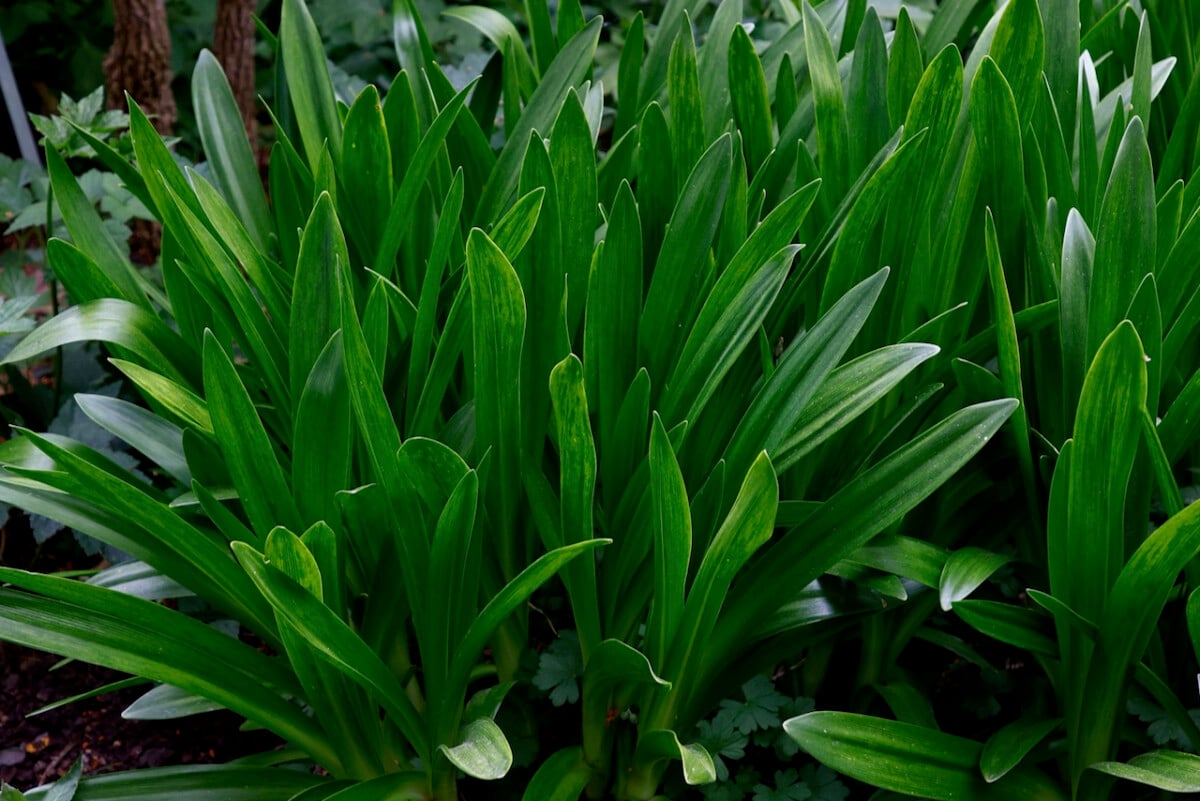
So when the foliage has grown so large to the point of blocking all the warmth and the sun from the roots and the crown, that’s when the plant will react by not producing blooms at all.
How to fix it.
We should just chop down some of the leaves to make room for the sun to shine through, right?
No, please don’t!
Just removing the leaves without addressing the primary cause (namely, the overcrowding) will not fix the problem.

At this point, the best solution is to just divide the agapanthus.
It may be a two person job with a large plant, but it’s worth the trouble.
Start by digging out the entire clump, making sure to not damage the roots too much. Once you’ve lifted the entire plant out of the ground, you can use secateurs or better yet a hori hori knife to cut through the root clump.
It’s totally up to you how many clumps you want to divide your mature agapanthus in. My advice is to not just divide it in two. Take advantage of the fact that you’re already doing the hard work and you can get a few extra plants out of it. A division is viable as long as it has at least a couple of growth points.
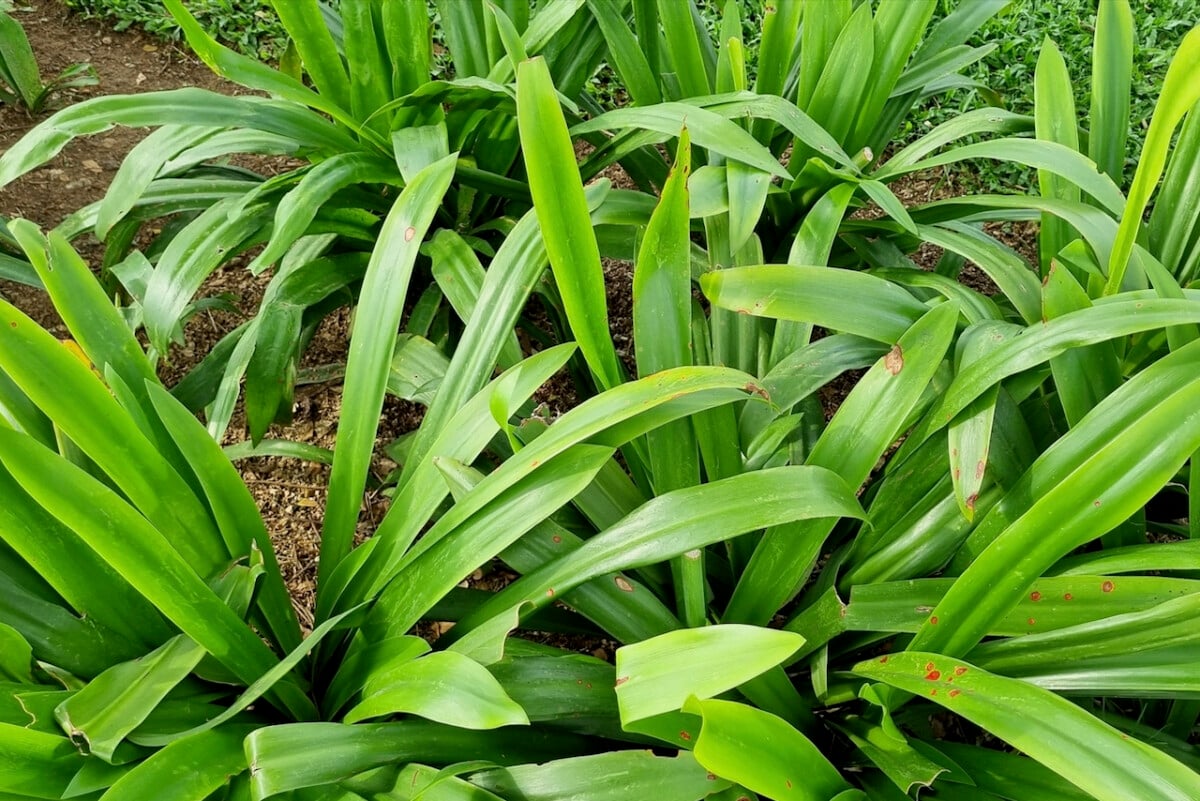
You can transplant the new plants to a different location, swap them with other gardeners or experiment with growing them in pots. If you divide your agapanthus now (in the fall), chances are it will recover and bloom again next summer.
Going forward, make a note to do this every three to five years in order to prevent another blooming dry spell.
2. Your agapanthus is too young.
Indeed, this has been the problem with the agapanthus that I planted in this article. It spent the first year in the garden just growing leaves. That’s normal. Then grew more leaves the next year. Understandable. By the third year, a few flower stalks emerged, but the flowers were very small.
If the same happens to your newly planted agapanthus, there’s no reason to fret. This is common if you’re gardening in a climate that’s different from that of Southern Africa, where the agapanthus is native to.
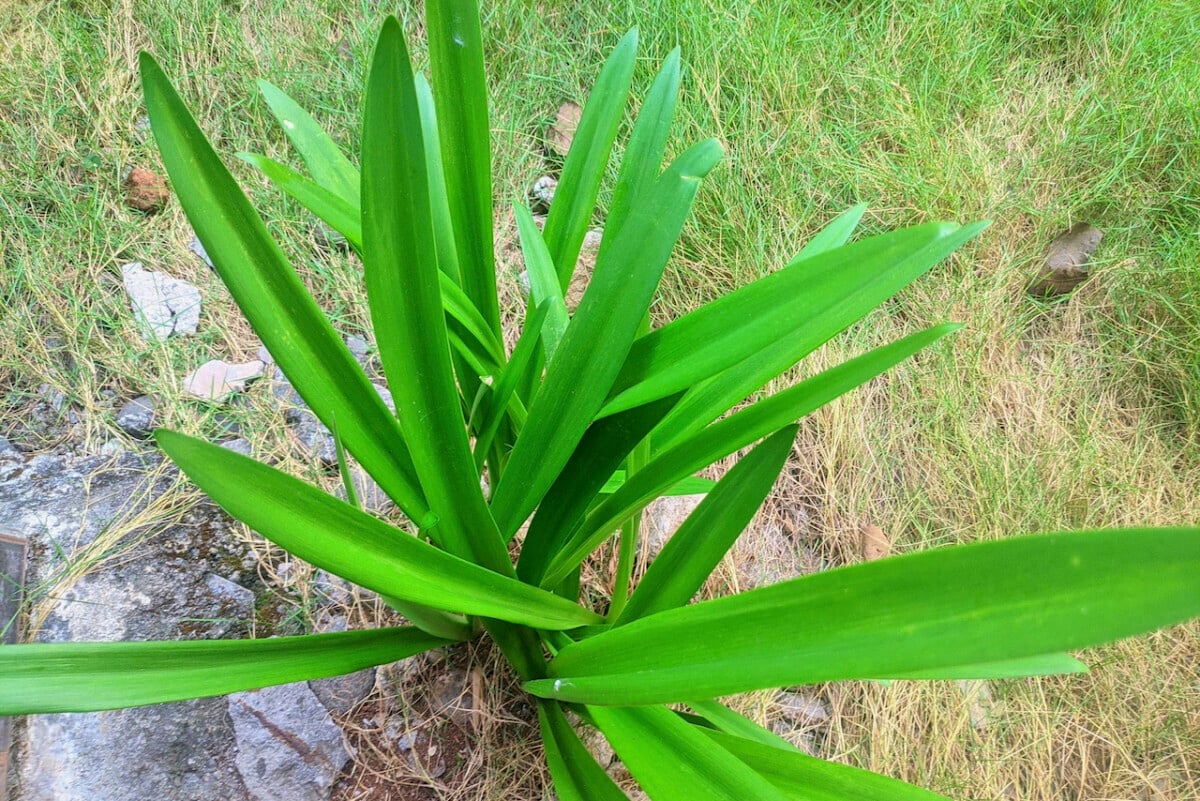
It may take a young plant a few years to get established and hit its stride. And you may not even think about it, but the agapanthus you’ve bought from your local nursery has surely been shipped from a warmer climate (or at least a warmer greenhouse). It needs some time to get over the shock and adjust to its new location.
How to fix it.
There’s nothing to fix here, except to work on delaying your gratification a bit. What you should do, in the meantime, is make sure all the other conditions are right for this showstopping ornamental to bloom when it’s ready. Make sure it’s getting enough sun, enough water, sufficient drainage and some fertilizer.
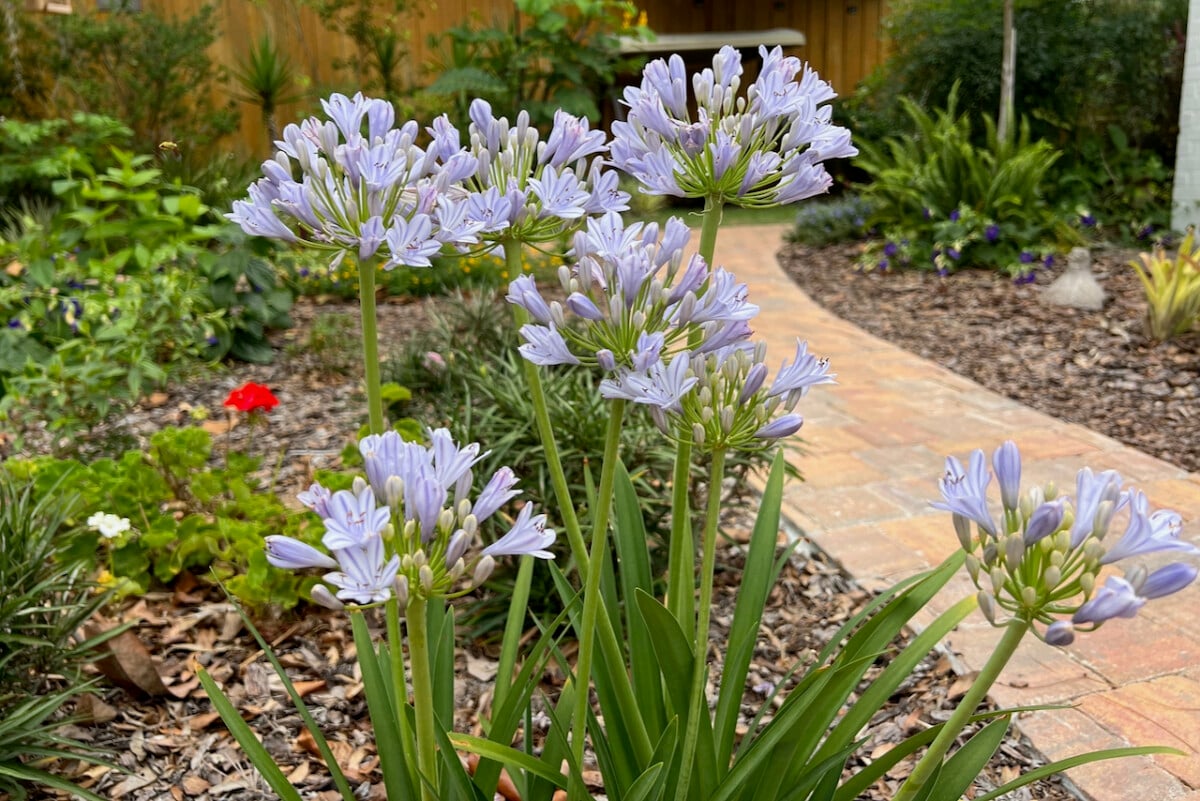
And if you’re one of those curious gardeners who has planted agapanthus from seed, your wait might be even longer. But what satisfaction to start such a gorgeous plant from seed, right?
3. Your agapanthus isn’t getting enough sun.
This point is super important. And perhaps the make or break factor in agapanthus growth.
Again, the clue is in its South African origins. This plant needs sun and it needs heat. When I say sun, I mean at least six hours of direct sunlight a day.
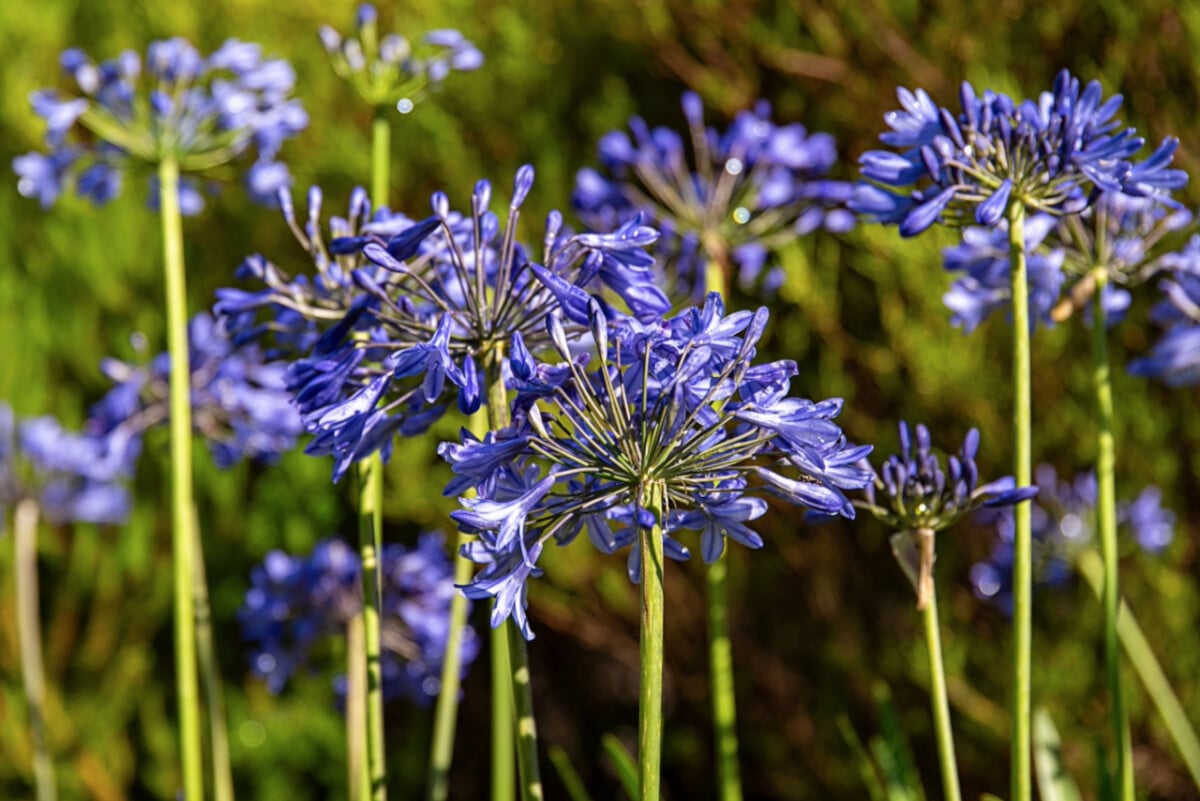
No, it will not die back in the shade, but it will not grow very well either. The flower stems will grow elongated (if they grow at all) and the flowers will be small and last a short time (if they bloom at all).
How to fix it.
Luckily, this is an easy fix. You just have to move the agapanthus to a spot that gets more sun.
Dig out the entire root structure and make sure that you bury it at the same height in its new location. And remember to water it really well, not just when you put it in the ground, but the following weeks as well, until it gets established.

And while you’re at it, maybe you can divide it now, just to save you the trouble of having to do it later (see point one).
But what if I don’t have a sunny garden border for my agapanthus?
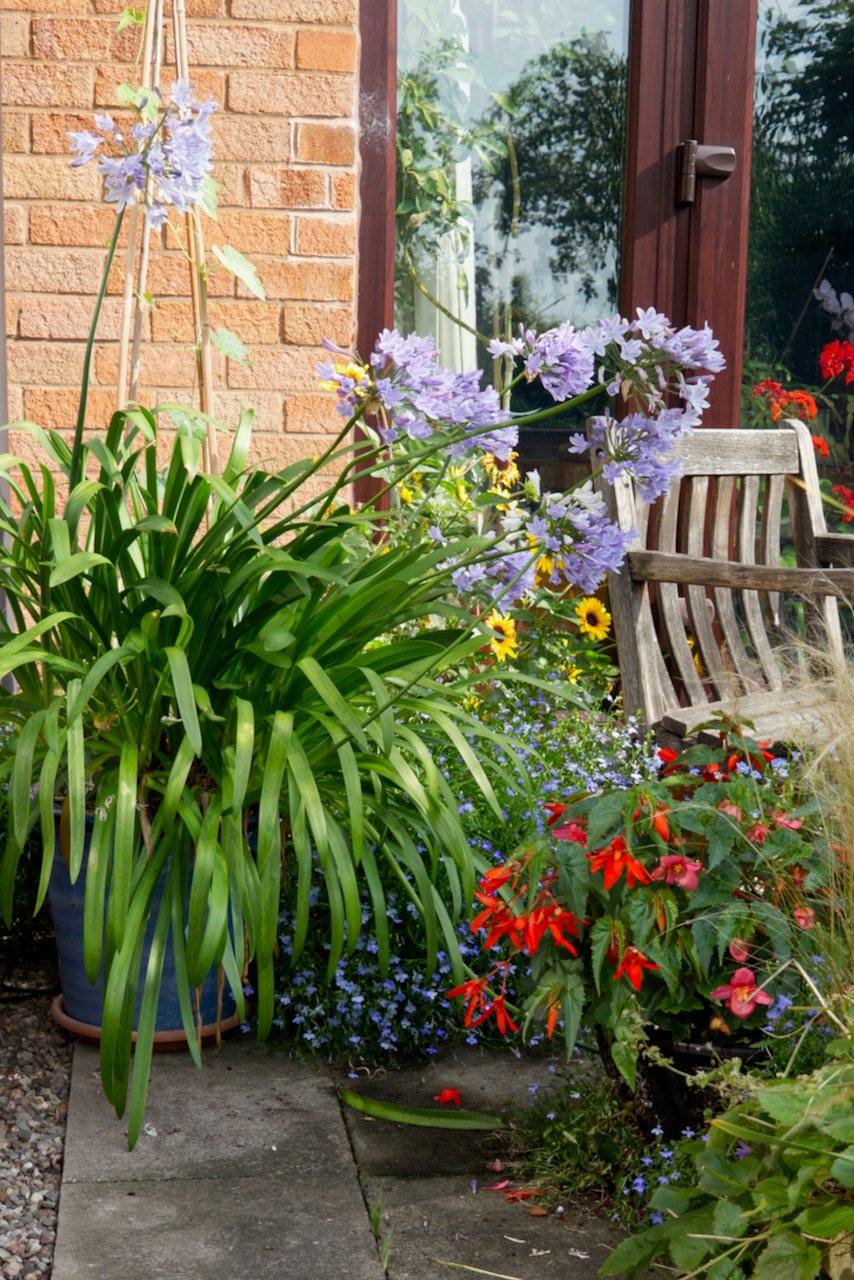
In that case, can you grow this plant in a container that does get enough sun? You can even put it on a wheeled base (such as this one). Then you can easily move it around to where it can soak more sun, depending on the time of year.
4. Your agapanthus is not getting enough water.
Once again, we have to learn our lessons from the natural habitat where this plant grows naturally. It grows well in fertile soil that gets plenty of rainfall. Have you been watering it properly?
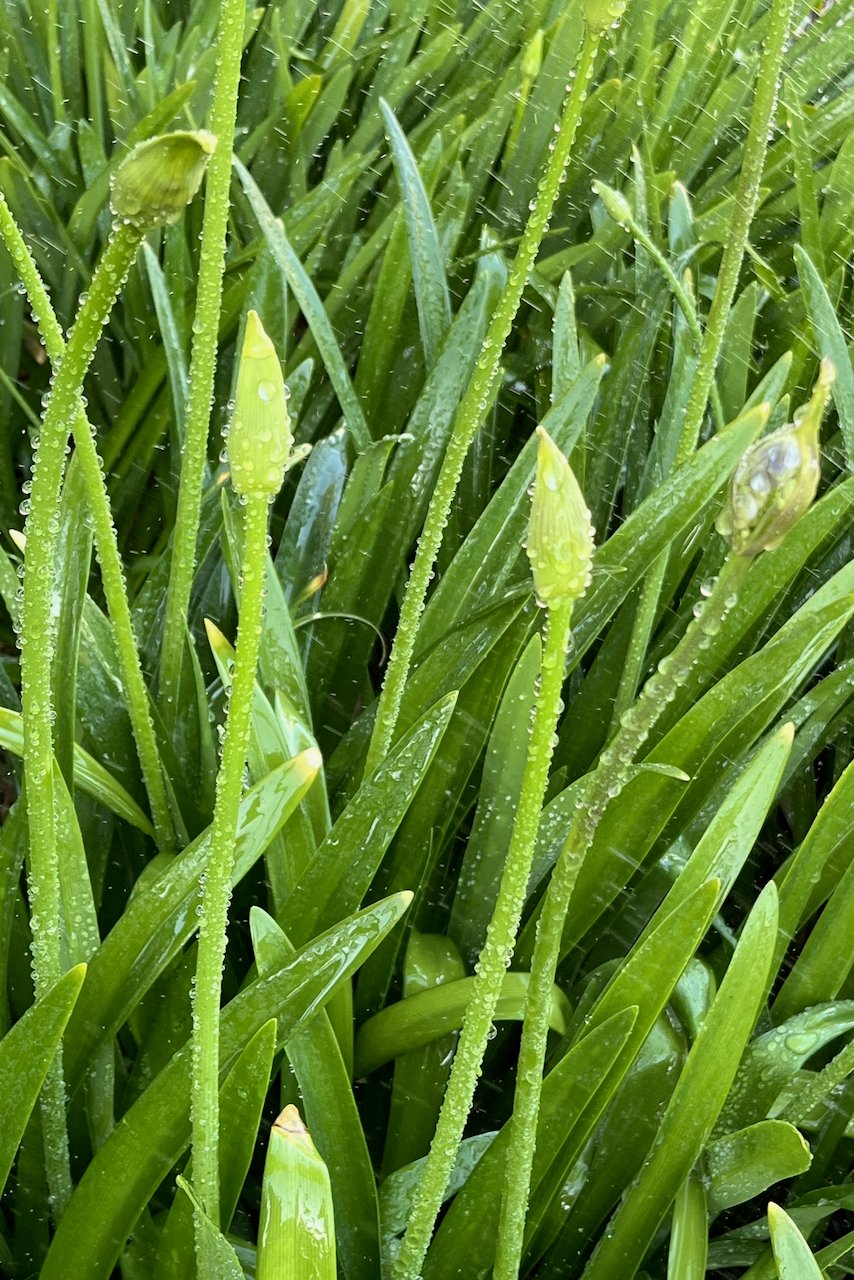
Yes, agapanthus is drought resistant, but that doesn’t mean it won’t react to the drought. Your agapanthus will not die back, but it will conserve energy by not producing blooms.
How to fix it.
Simple, just water it more if you’re not getting enough rainfall throughout its growing season
This point very much ties in with my previous two. If you’ve moved your agapanthus to get more sunshine, make sure you adjust its watering schedule. It will always need more water the more sun it gets. The same thing applies if you’ve moved it to a container. You have to remember to keep it watered.
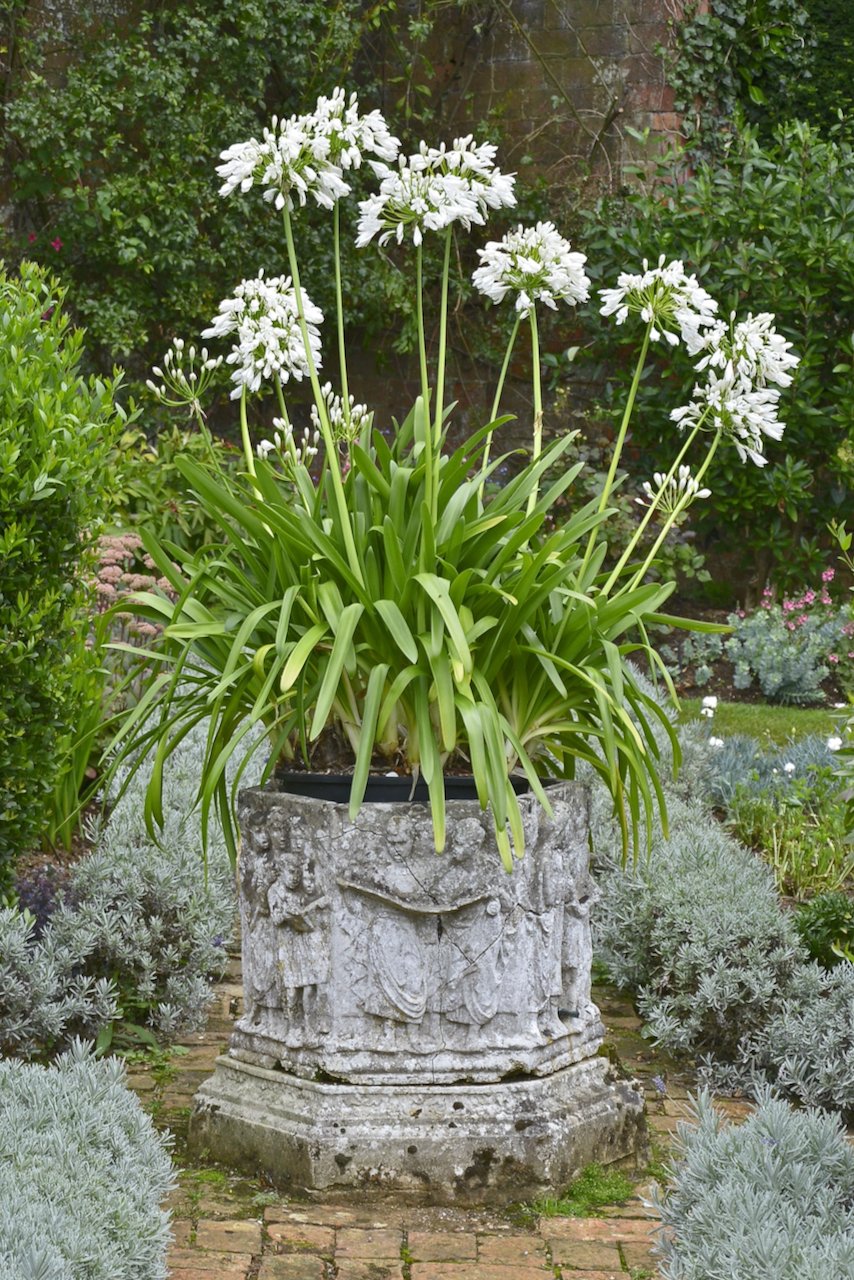
And remember that you have to adjust your expectations. Keep in mind that next year’s flowers are formed during the previous fall, so any adjustments that you make might take a bit longer to show results.
5. Your agapanthus is growing in poor or depleted soil.
Agapanthus is a hungry plant, so you have to remember to feed its soil well. And feed it all through the year, not just as a troubleshooting method for when the plant is not getting enough blooms.
Apply a good layer of compost in the spring, then again in the summer and in the fall, before the plant goes into dormancy.
My philosophy is that it’s always better to feed the soil rather than just feed the plant.

But if you’re looking for a quick solution and going the route of applying topical fertilizer, make sure you stick to an organic one that’s rich in potassium. This will encourage bloom without overfeeding the foliage.
Keep in mind that it is possible to overfertilize your agapanthus and have the same (undesired) effect. If it gets too much nitrogen, the plant will react by putting out a mass of foliage; and that’s where the energy will go, instead of going to bloom.
One thing that will not work in getting you agapanthus to bloom more.
Deadheading.
Your agapanthus will not bloom better if you keep deadheading it. I know deadheading is a good trick to have up our sleeve when we need more blooms from a plant.
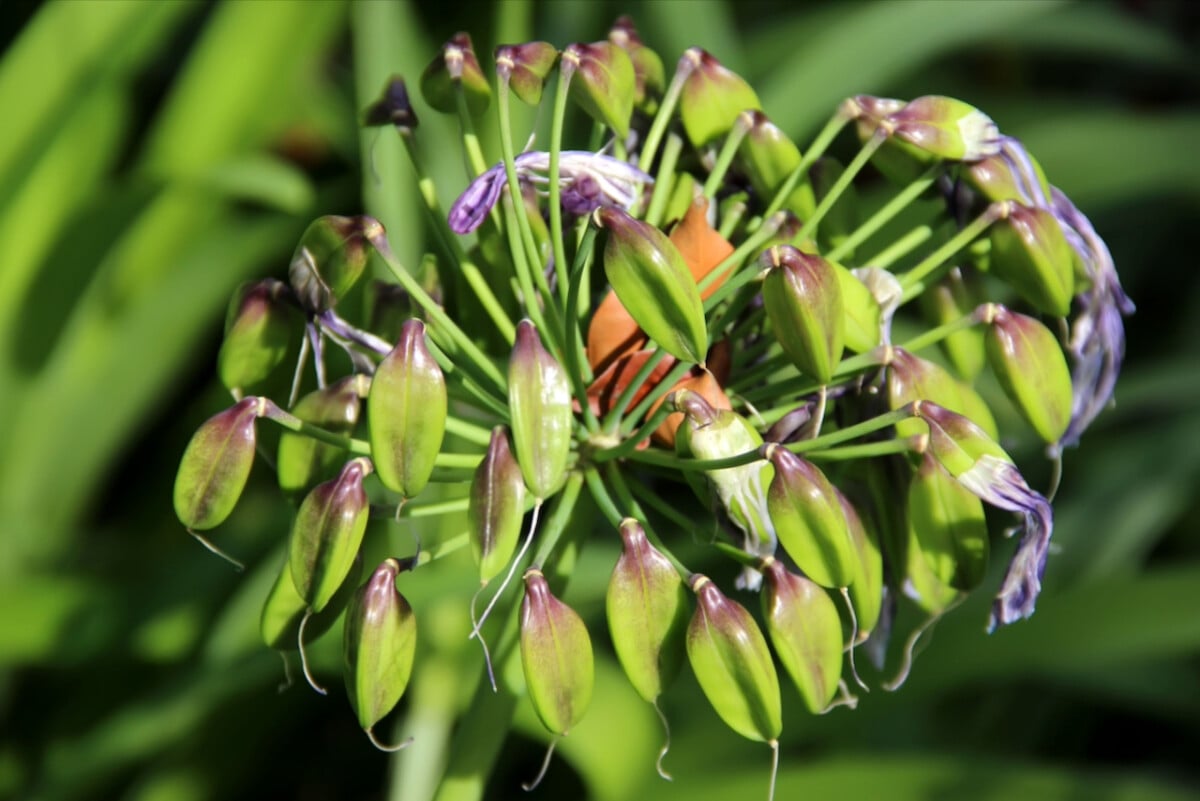
But it won’t work on agapanthus simply because this year’s flowers were actually formed deep down in the plant last fall. So any deadheading that we do now will not have any reblooming effect. However, it might have an effect on next year’s blooms, as the plant doesn’t out its energy into forming seeds.
The truth is agapanthus is a very forgiving plant. Even if it hasn’t flowered this summer, it will bounce back quickly as long as we take steps to remedy the situation. And of course, as long as we allow it some time to resettle and regroup.