
As it sometimes happens with my gardening articles, what I set out to write is not always what I end up publishing. Take, for example, this article you’re reading now. I set out to write a simple tutorial on what to do with valerian (Valeriana officinalis) after it’s done blooming.
What I ended up with instead – and I’m writing this introduction last, so I know – is a valerian appreciation post.
I can’t help it. I’m smitten with these lanky garden skyscrapers and I think they should get more love. I use them to add height, texture and motion in the garden (they sway beautifully in the breeze).
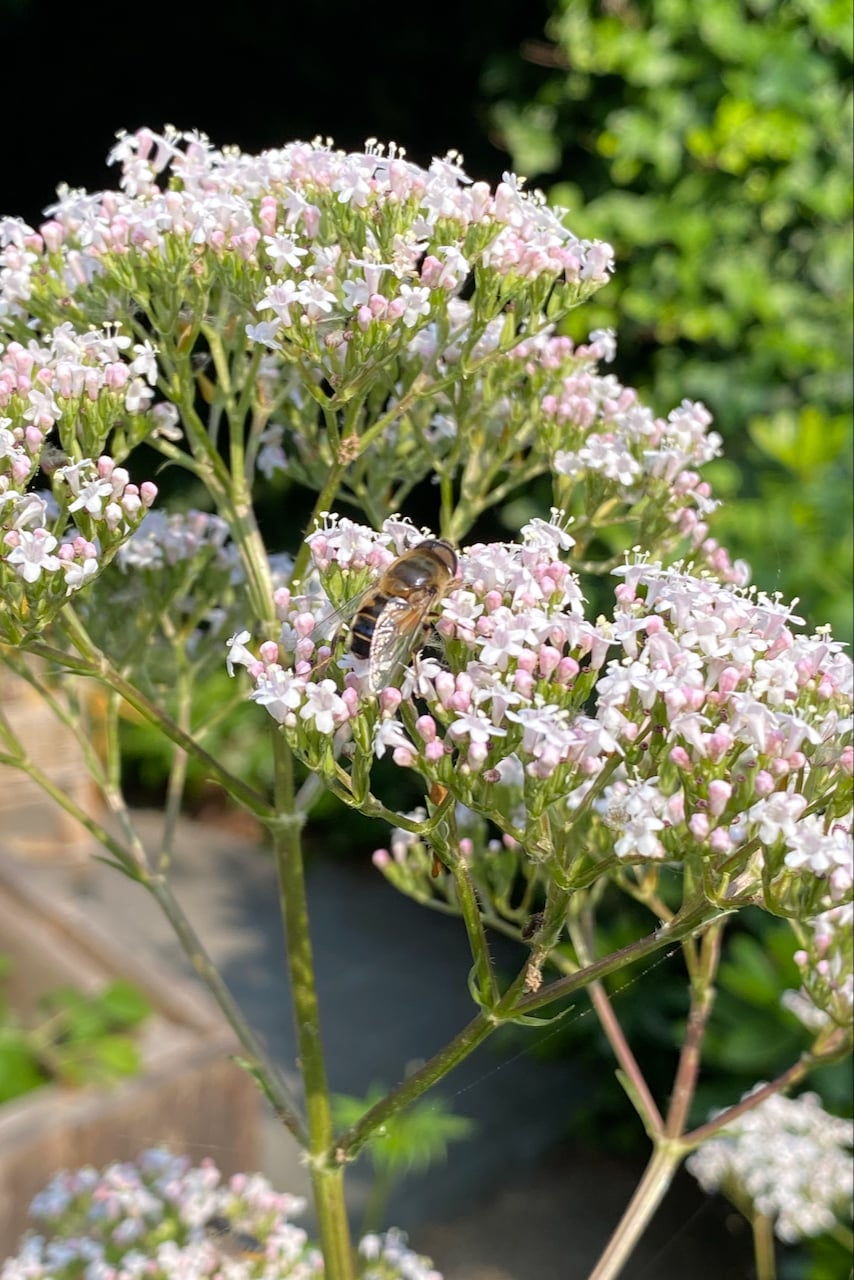
Pollinators also love the clusters of fragrant flowers. All the valerian in my garden turns into a bee disco; but instead of a disco ball, it’s a shiny valerian flowerhead.
And it’s the kind of plant that becomes even more useful once it’s done flowering. Here are a few things I do with my valerian once the blooms are gone.
1. I deadhead my valerian as early as possible.
One thing you’ll be warned about when you grow valerian is that it spreads underground by sending rhizomes. In my garden, valerian hasn’t traveled very far in the four years that I’ve been growing it. I would say it only made it as far as about ten inches from the mother-plant. And even then, I was able to cut the new growth really easily because the roots grow close to the surface.
But if you really want to keep your valerian in check and prevent it from spreading far and wide, you should be more worried about self-seeding.
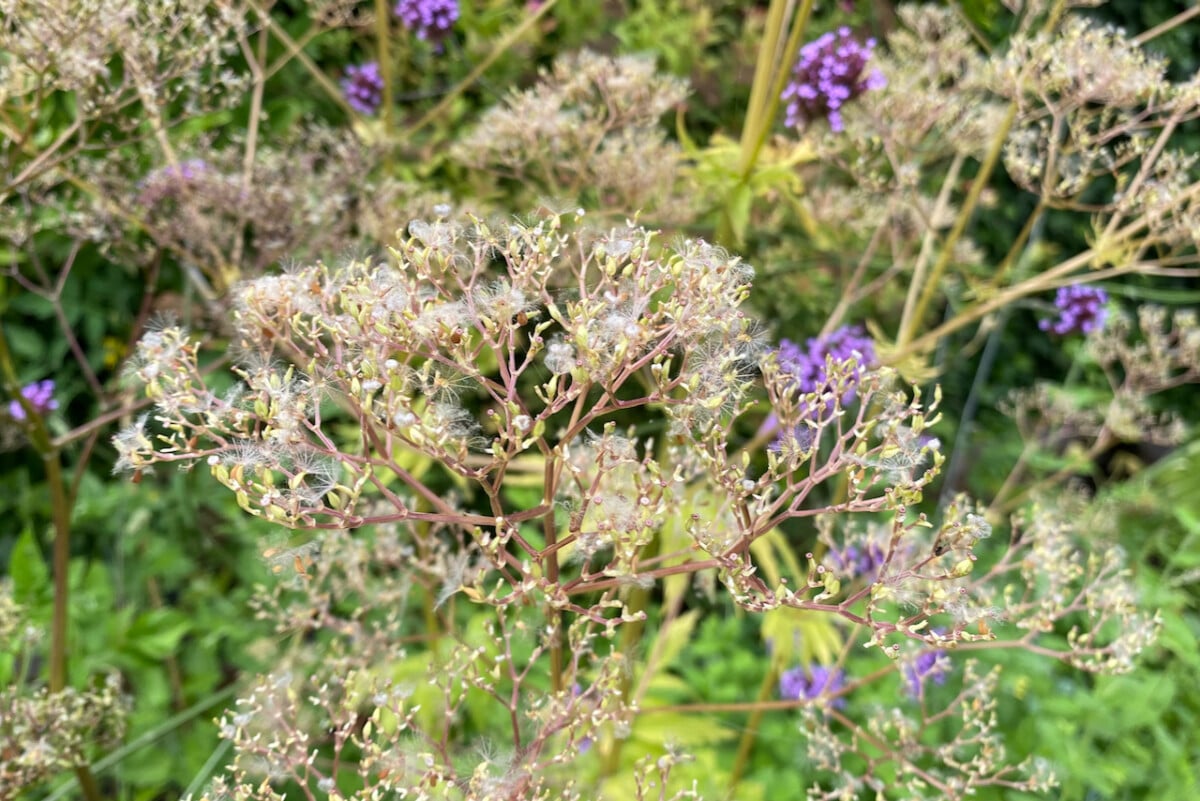
In the first year that I grew valerian, I was a bit lax about letting it go to seed. In my zone, it’s done blooming in mid- to end of June. I just so happened to be preparing for vacation, so I ignored it, thinking I’d get to it a couple of weeks later. Let’s just say that simply placing a paper bag on top of the seed heads before I left would have been a better choice.
Valerian seeds have a little “parachute” that helps them blow in the wind and land far away.
So I make sure to catch them before they’re fully dry and ready to spread. Once the flowers have started falling and the seed pods start turning green, that’s when I cut off all the seed heads on the plant.
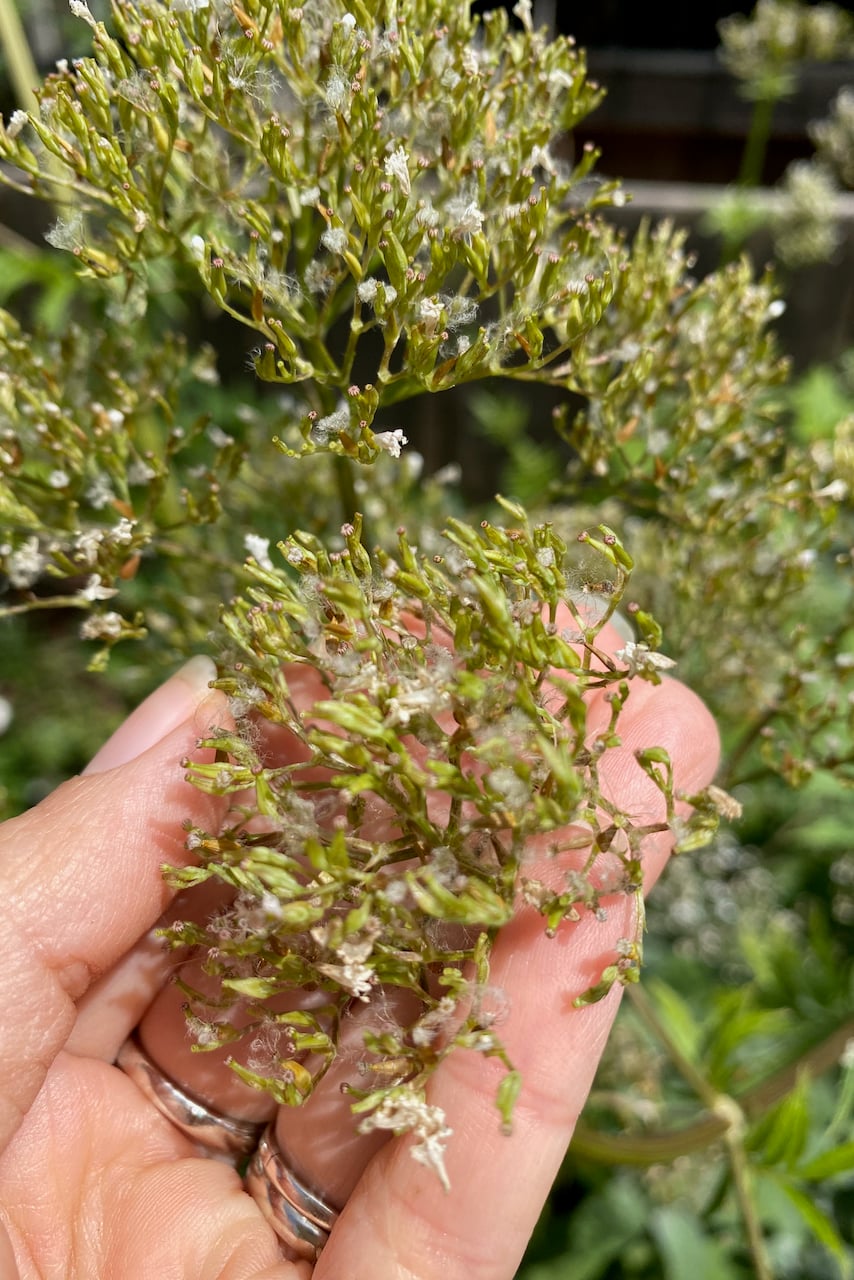
There may still be some flowers open for pollinators at this point, but I don’t want to risk the spread.
And I’ll confess that valerian seed heads are one of the few types of garden debris that I never compost. They go in the municipal compost bin collected by the city. They compost in industrial facilities at very high temperatures (which reduces the risk of valerian seed resurrection), which is a set-up I’ll never achieve in my small compost bin.
If you don’t have municipal compost collection, you can just throw the valerian seed pods out with the regular household waste. There’s no need to burn them. They’re not that evil.
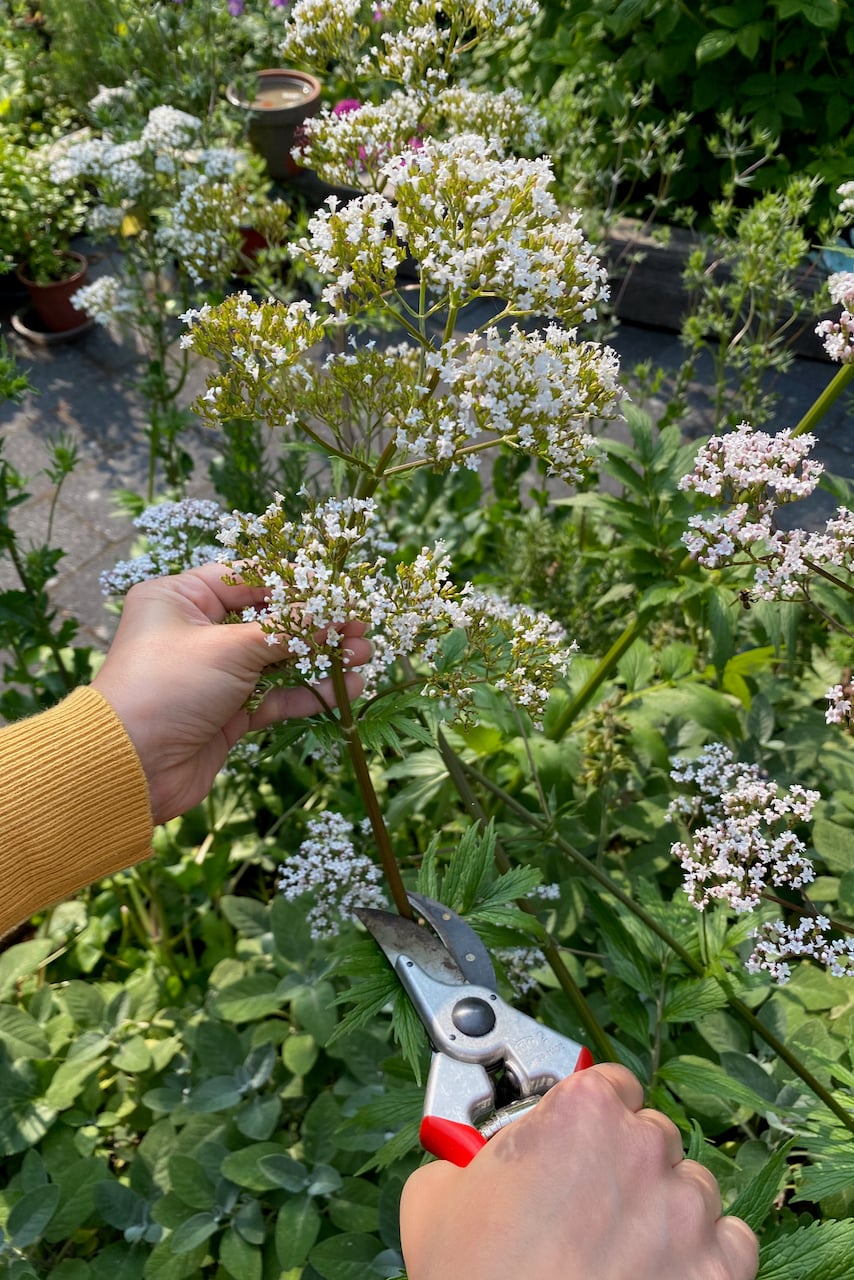
I want to stress that it’s really important that we do this step first. The next few steps will shake the plant, quite literally, which will contribute to unwanted seed dispersion.
On the other hand, if this is the first year you’re growing valerian and you do want it to spread naturally in your garden, go ahead and let one plant go to seed. As much as I like to complain about them, the seedlings are pretty easy to pluck out in spring if they’ve landed where you don’t want them.
2. I harvest and dry the valerian leaves.
Now that the seed heads are out of the way, let’s travel down the plant and see more ways we can make use of this amazing herb.
Let’s start with the leaves. Valerian leaves are edible, and we can harvest them at any time during the growing season. I like to harvest some young leaves to use fresh, but I also collect more mature leaves to dry.
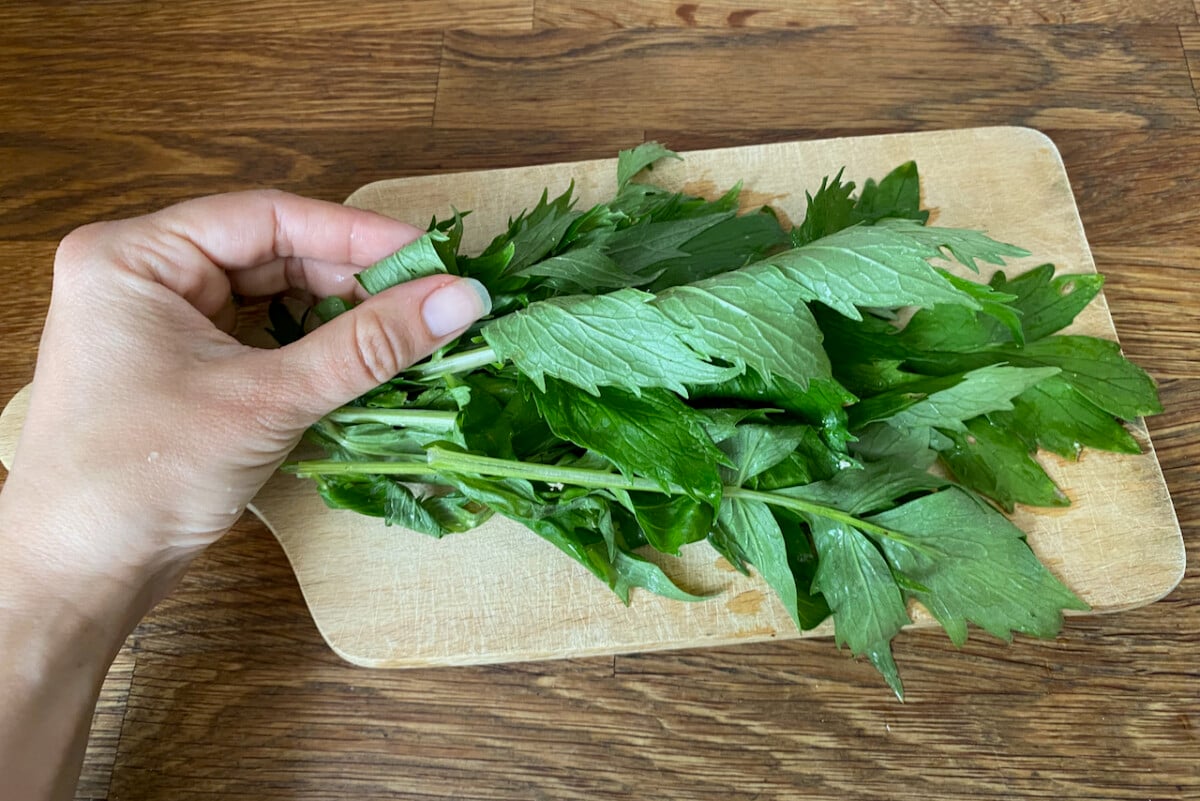
This is where letting some go to seed comes in handy too. The following spring and early summer, you’ll have crisp first-year valerian leaves and roots to pick.
You can sprinkle the leaves on soups and salads or infuse them in hot water for a calming herbal tea.
A word of advice though: when I say salads, I wouldn’t use valerian leaves as I use lettuce or spinach, for example. I use them as a garnish. Fresh valerian has a really strong and distinct taste, so taste a bit to see if you like the taste or if you can get used to it. Try it a few times, because it might just be an acquired taste. It was for me.
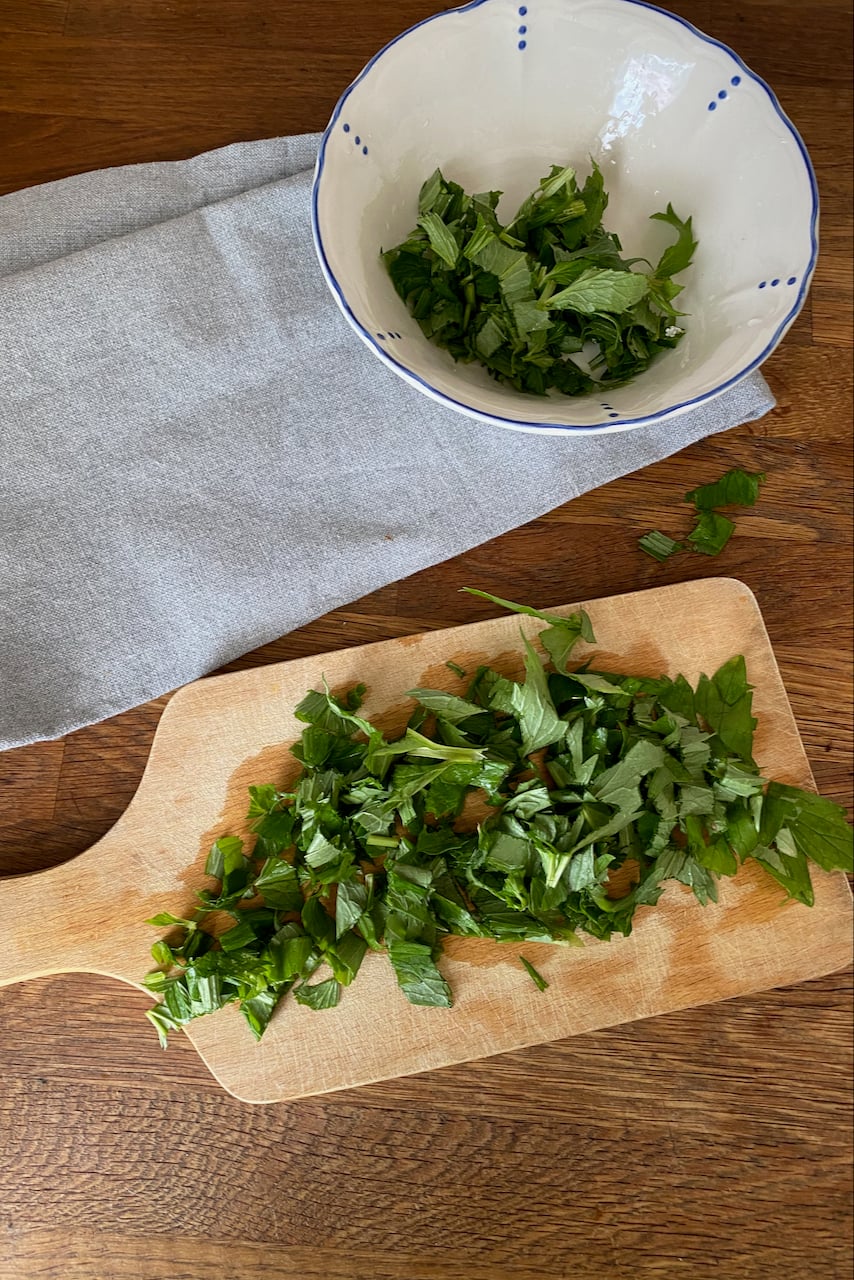
I do like the flavor of valerian, in general, but I find the taste of fresh foliage too overpowering. So I prefer to chop up the leaves and dry them. I then use them in combination with other herbs, to make tea. You can use them for either hot tea in the cold months or ice tea in the summer.
3. I harvest and dry the valerian roots.
Now we’re getting to the good part. The roots.
If you’ve ever bought valerian supplements at the health food store, this is what you were buying. Crushed valerian roots.
Valerian roots have been used in traditional herbal medicine for hundreds of years to improve mild nervous tension, as an anxiety relief and to alleviate insomnia. But even though the roots only have a mild sedative effect, you should always consult with a medical professional (which we are not!) before you start consuming valerian.
I have been using the roots infused in hot water – as a brew – for years to calm my overactive brain. (Most of the time, it works wonders. But not always.)
In fact, this is the main reason why I grow valerian in my herb garden. I find that the store-bought supplements are not only overpriced, but they contain all sorts of other additives that I would rather avoid.
Here’s how I harvest valerian roots.
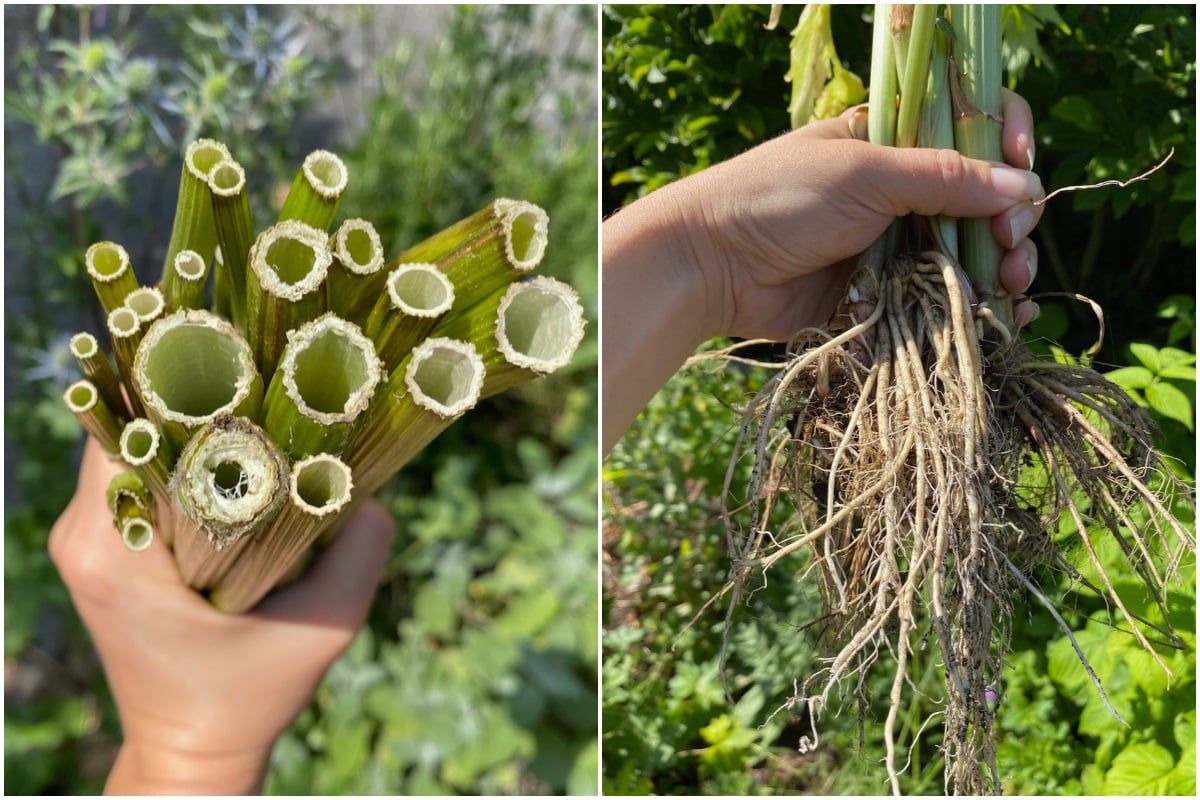
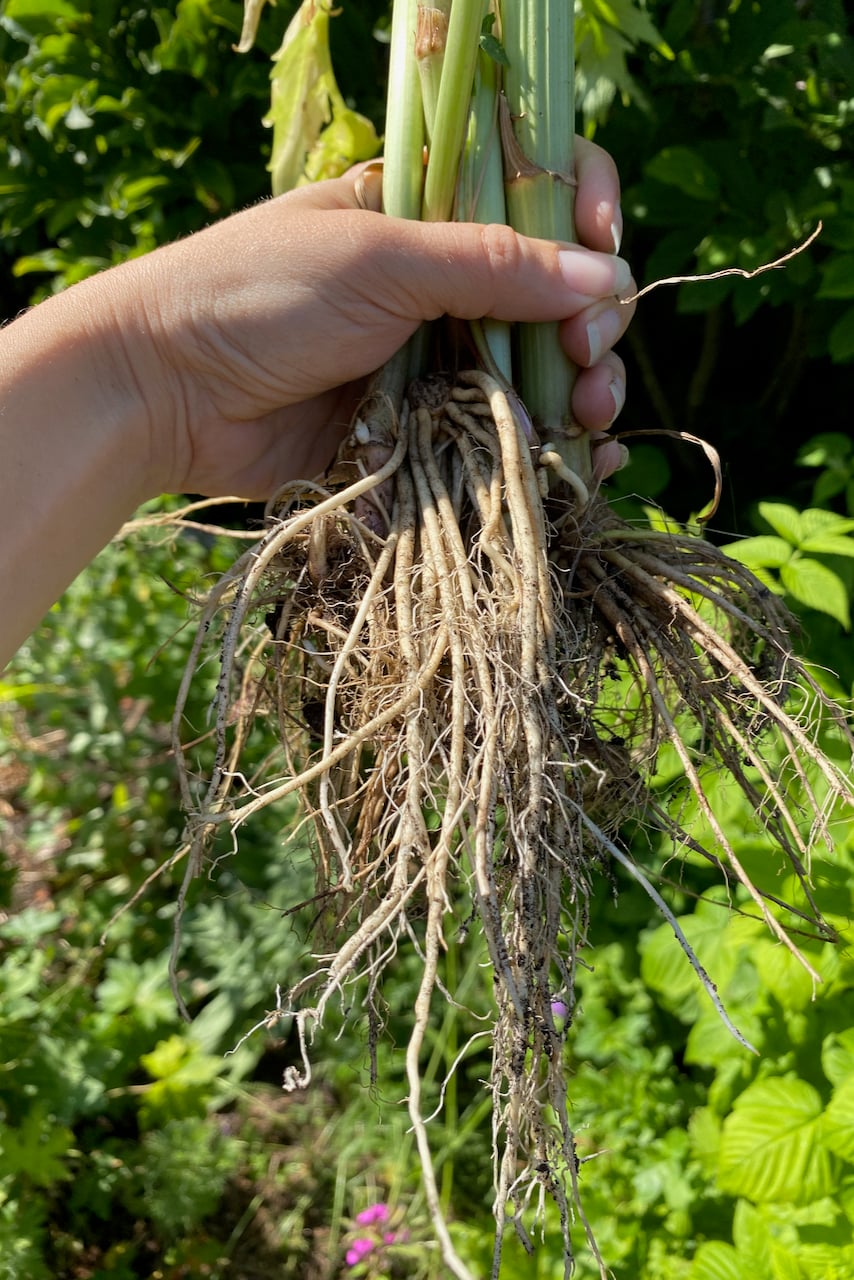
Valerian roots are really easy to harvest. I will simply grab the stalks and pull out the entire root structure. It will look like this.
Obviously the roots of older plants are larger and the roots of younger plants are smaller. But they all look pretty similar.
However, if the valerian plants are older, and have a tighter grip underground, we may need to loosen them up by digging around them with a trowel.
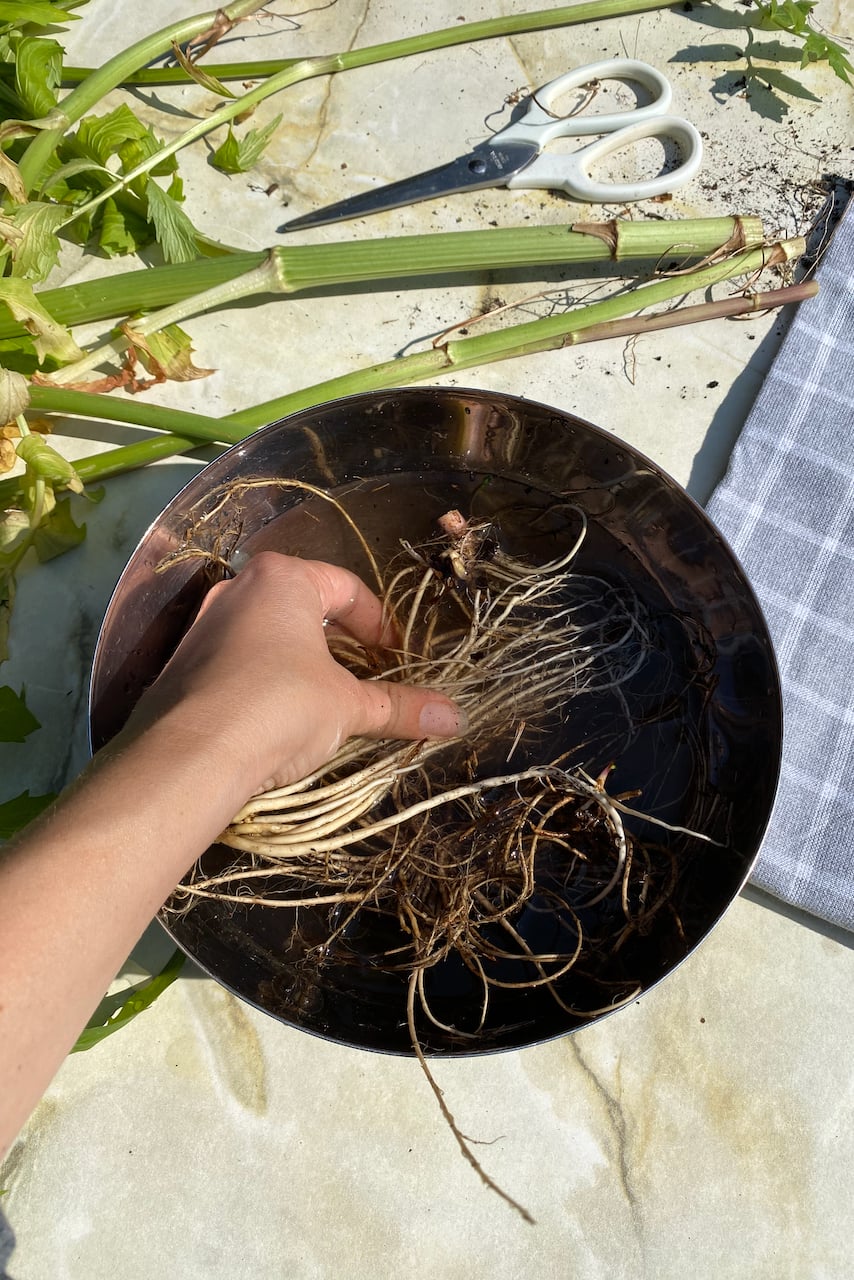
They don’t look like something I would like to consume yet, so I have to give them a good wash first. If you’re growing valerian in sandy soil, cleaning the roots will be easier. Simply run them under a full blast of tap water.
Richer soil or clay-based soil will need the extra step of soaking them. I only use cold water and only let them soak for about ten to fifteen minutes. I give them a gentle scrubbing and they should be ready to dry. Keep in mind that they’re naturally golden-brown, so there’s no need to clean them extra until they become white.
Once the roots are clean, I lay them on a tray to dry.
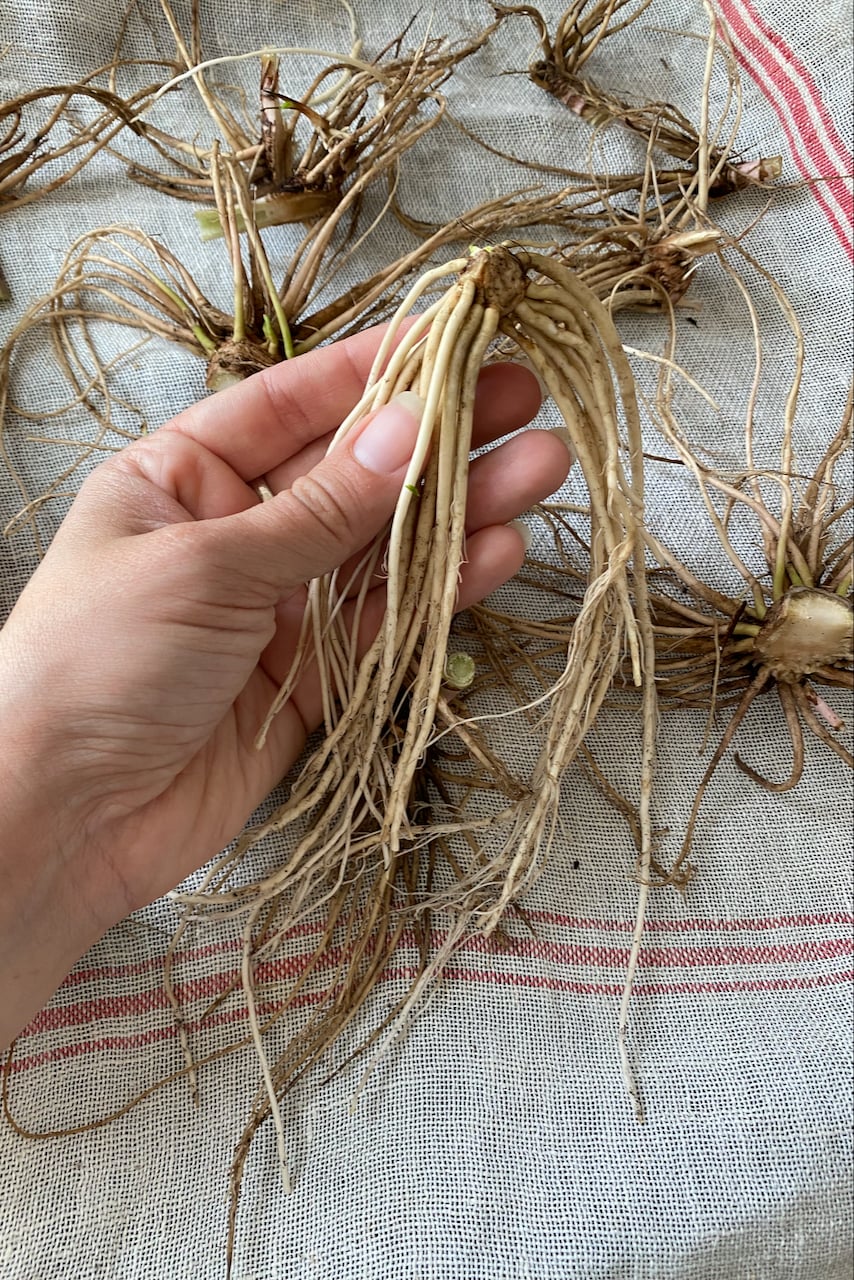
Since I’m always harvesting the roots in the middle of summer, I prefer to dry them in the sun. It never takes more than a week in full sun to get the job done. A metal black tray will do the job even faster.
Here they are, all dry and ready to store, after only three days of drying in full sun.
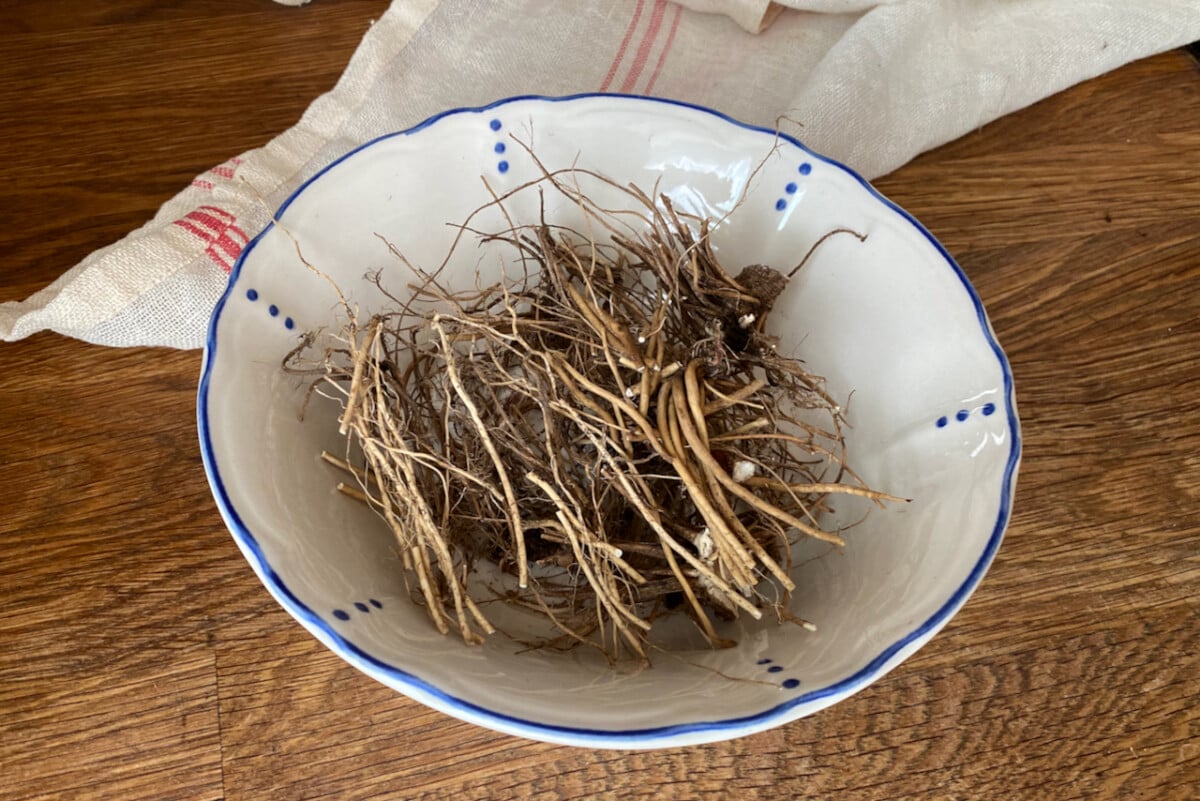
You could infuse them as they are, straight after cleaning, since fresh roots are more potent than dry ones. Again, it’s a case of whether you like (or can tolerate) the taste. I find fresh roots to be too pungent for my taste, so I prefer to dry them before I use them to make tea.
Dry roots will store better too. And since I’m harvesting them in June, I always make sure I have enough to store to last me until the following year. I consume valerian (and all medicinal herbs) in moderation, so I don’t usually run out.
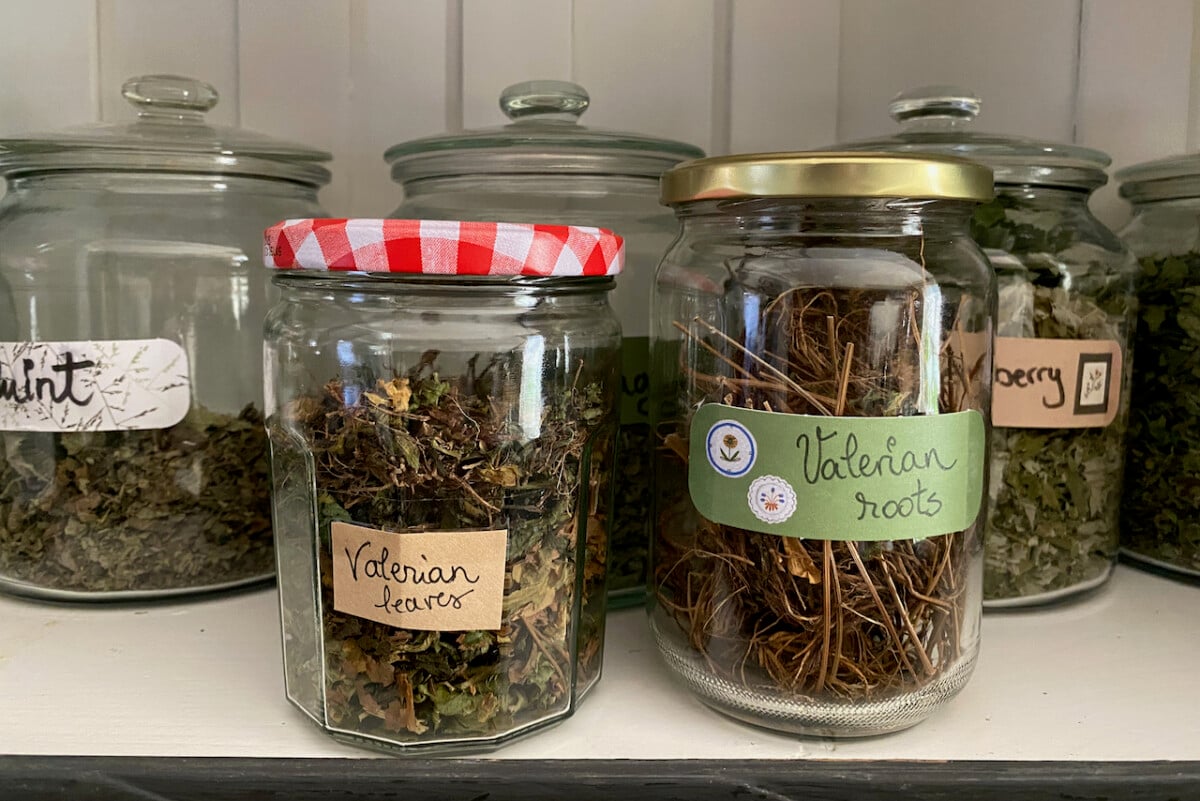
Another reason to dry the roots is if you’re planning to use them in tinctures, syrups or cordials (such as this valerian and mint concoction).
4. I use valerian stems for insect hotels.
When I decided to first plant valerian, I already knew about the uses that I’ve been talking about so far. But I’m quite proud to tell you that I came up with a use for the stems too. Although I’m sure I’m not the only one who thought of this.
Valerian stems have three properties that make them perfect for other garden uses:
- They grow very tall;
- They are hard and fibrous;
- They are hollow.
So once the plant is done for the season – or once I’ve harvested the roots – I cut down the stems into shorter pieces. I then tuck them into sheltered corners of the garden in what I call “insect welcome centers.”
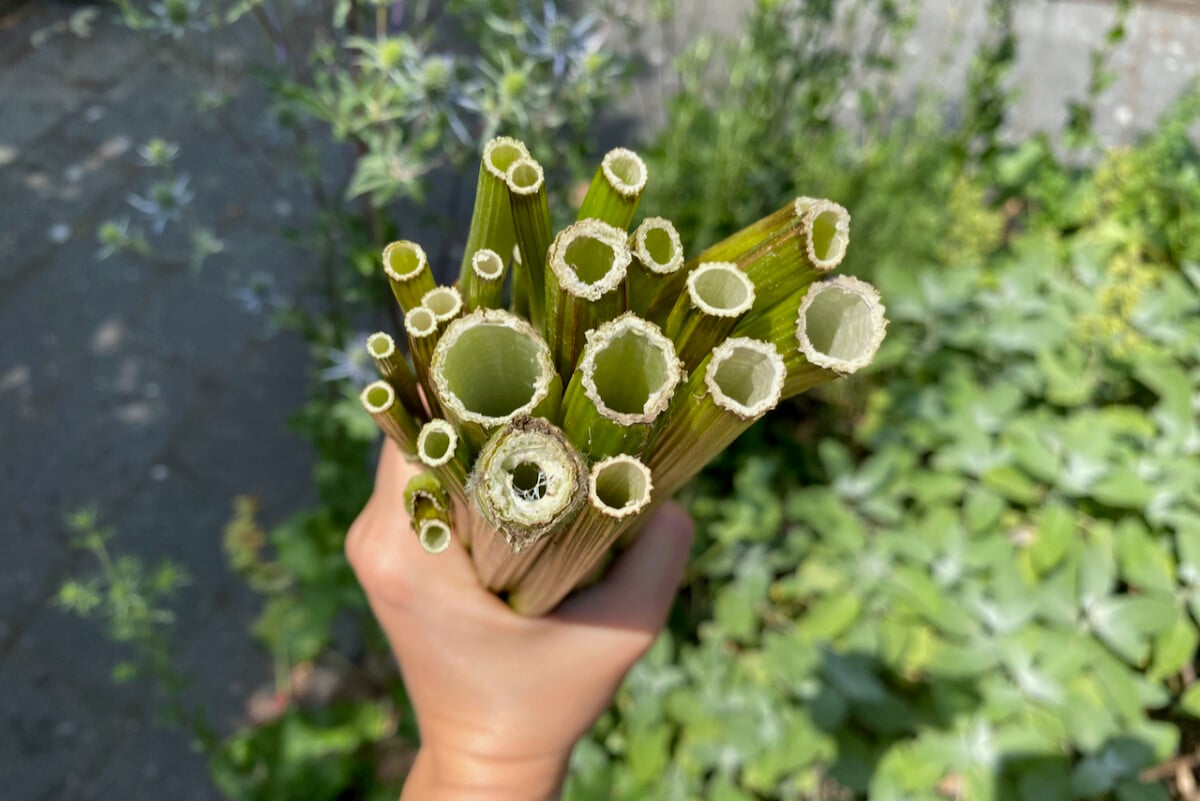
You could use a prettier version of an insect hotel, of course. But I prefer to have more piles of organic materials strewn around for better coverage. I think of it less like a Hilton and more like a small-town bed and breakfast setup. And valerian stems provide an excellent structure.
As you can see, there are so many ways that we can use valerian; and I love that it’s just as useful once it’s done flowering as it is when it’s adorning our gardens with its blooms.